


Dos and Don’ts for Using Scissor Lifts and Cherry Pickers
A practical safety guide for managers and health and safety leads
Scissor lifts and cherry pickers (boom lifts) are among the most versatile and widely used pieces of access equipment to enable safe work at height. But with that versatility comes responsibility. These machines are heavy and powerful, and unfortunately, every year, accidents occur that could be avoided with better planning, training, or daily processes and procedures. For project managers and Health and Safety leads, understanding the key dos and don’ts of scissor lift and cherry picker use isn’t just best practice, it’s a legal and moral obligation.
This guide covers the essentials to help you keep your teams safe, stay compliant, and run your projects without costly delays or incidents for you, your team or your families…
Understanding These Access Platforms
Before diving into the dos and don’ts, it’s worth clarifying two of the main types of mobile elevated work platforms (MEWPs):
Scissor lifts use a crisscross mechanism, known as the scissor pack, to raise a work platform vertically. They’re ideal for indoor and outdoor tasks requiring a stable, level area for work such as maintenance, installations, and construction finishes. You can choose either diesel or electric scissor lifts depending on the environment you’re working in.
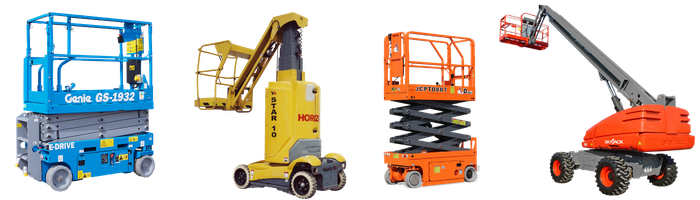
Cherry pickers (also known as boom lifts) use an articulating, telescopic or vertical arm to reach areas that aren’t directly above the machine. They offer horizontal reach and rotation, making them suitable for complex tasks at height that require access around and over obstacles.
Both machine types fall under the broader category of Mobile Elevated Work Platforms (MEWPs) and are governed by core regulations including Work at Height Regulations 2005, PUWER (Provision and Use of Work Equipment Regulations 1998) and LOLER (LOLER stands for Lifting Operations and Lifting Equipment Regulations 1998).
For further information on the difference between these two types of MEWPs read our blog, Boom Lift vs Scissor Lift: What are the Differences and Which do I Need?
The Dos
✅ Do Conduct a Thorough Risk Assessment
Before any MEWP is deployed on site, a detailed risk assessment must be completed. This should cover many aspects such as the working height, ground conditions, overhead hazards (power lines, pipes, structural elements), the proximity of other workers, weather conditions, and the intended task. The risk assessment should inform which type of machine is selected and how it will be operated. As an H&S lead or manager, you should ensure this assessment is documented, reviewed, and communicated to all relevant personnel before work begins. Another aspect to plan for is MEWP rescue planning, which are form part of safe systems of work, but are not always practised.
✅ Do Ensure Operators Are Properly Trained
This is non-negotiable. Under The Work at Height Regulations 2005 it states that “Every employer shall ensure that no person engages in any activity, including organisation, planning and supervision, in relation to work at height or work equipment for use in such work unless he/she is competent to do so or, if being trained, is being supervised by a competent person”.
In the UK, IPAF (International Powered Access Federation) is the industry-standard certification for MEWP training and is widely required by contractors and clients alike. Untrained or inadequately trained MEWP operators and managers are a safety risk. So, ensure operators are trained appropriately for the specific machine category they’ll be using (e.g., 3a for scissor lifts, 3b for boom lifts) and records are up to date and that operators are trained. In addition, the IPAF MEWPs for Managers course is invaluable for site safety offering guidance on regulations, accident prevention and control, personnel protection, and MEWP familiarisation.

✅ Do Carry Out a Pre-Use Inspection
This is probably the most important daily habit MEWP operators and managers should adopt: every access platform should be inspected before each use. Operators should check for fluid leaks, tyre condition, battery charge levels, control function, safety harness anchor points, and any visible damage to the platform or structure. Any defects must be reported immediately and the machine taken out of service until repaired. When hiring MEWPs with Horizon, should your machine be unsafe to use, our 8 customer commitments dictate that you’ll have an engineer on the phone within 15 minutes, and if necessary, onsite within 3 hours. Failing that, a replacement machine will be sent.
✅ Do Wear the Correct PPE
As a minimum, operators and those working near MEWPs being operated at height, should wear a hard hat, high-visibility vest, and safety footwear. When using a cherry picker or any boom-type MEWP, a harness and lanyard must be worn and attached to the designated anchor point within the basket. Unfortunately, falls from height remain one of the leading causes of workplace fatalities in the UK. A harness is therefore a vital piece of PPE. But other hazards like overhead beams and falling tools pose a risk. Hence why PPE (Personal Protective Equipment) is a necessity. Ensure you speak with your MEWP supplier or consult IPAF or Health and Safety Executive for MEWP PPE advice.
✅ Do Consider Ground and Environmental Conditions
Scissor lifts and cherry pickers require stable ground to operate safely. Check for soft ground, slopes, drainage grates, kerbs, or uneven surfaces that could cause instability or tipping. Also, if your MEWP is too heavy for the surface you’re working on, there’s a possibility of the MEWP sinking or falling through the floor if on a mezzanine or 2nd floor. In outdoor environments, wind speed is a critical factor: most MEWPs have a maximum operational wind speed. Always check the manufacturer’s specifications and monitor weather forecasts.
✅ Do Establish and Enforce Exclusion Zones
Nobody should be working or walking beneath an elevated platform without adequate protection. Therefore, establishing clearly marked exclusion zones around the working area and using barriers, signage, and banksmen is a vital way to avoid accidents. Falling objects are a serious hazard, even small tools dropped from height can cause fatal injuries.
✅ Do Follow the Manufacturer’s Load Limits
Every machine has a maximum safe working load (SWL) capacity, which accounts for the combined weight of operators, tools, and materials. Overloading a platform is a cause of tip-over incidents. Check the rated capacity before loading and ensure all personnel understand that the limit must never be exceeded.
The Don’ts
❌ Don’t Allow Untrained Personnel to Operate the Equipment
It may sound obvious, but this rule is broken more often than you’d think, particularly on busy sites where schedules may be tight and supervisors feel pressure to keep things moving. No one should operate a scissor lift or cherry picker without the correct certification and a site-specific induction. This applies to temporary workers, subcontractors, and agency staff equally.
❌ Don’t Ignore Overhead Hazards
Overhead power lines are among the most dangerous hazards for MEWP operators. The first questions you should ask here are, ‘Is it too dangerous to work at height?’ and ‘Are there alternatives to working near power lines?’. If it is deemed that work must go ahead, a risk assessment by trained people must take place and stakeholders must be involved and sign the work off. Before a platform is even ordered, the risk assessment must confirm the height and location of all overhead obstacles, including cables, pipes, beams, and signage. Safe working distances from power lines must be always maintained. If in doubt, contact the relevant utility provider before work commences to switch off power. But if it is too dangerous, just don’t do the work.
❌ Don’t Ignore Overhead Hazards
Overhead power lines are among the most dangerous hazards for MEWP operators. The first questions you should ask here are, ‘Is it too dangerous to work at height?’ and ‘Are there alternatives to working near power lines?’. If it is deemed that work must go ahead, a risk assessment by trained people must take place and stakeholders must be involved and sign the work off. Before a platform is even ordered, the risk assessment must confirm the height and location of all overhead obstacles, including cables, pipes, beams, and signage. Safe working distances from power lines must be always maintained. If in doubt, contact the relevant utility provider before work commences to switch off power. But if it is too dangerous, just don’t do the work.

❌ Don’t Use the Equipment as a Crane or Hoist
MEWPs are designed to lift people, materials and tools, and should not be used as improvised cranes or hoisting equipment. Attaching loads to the outside of the basket, using the platform to push or pull materials, or attempting to move the machine while the platform is raised beyond the permitted travel height are all serious misuses of the access equipment that can result in tip-overs, malfunctions or structural failure. All of which can cause injuries or fatalities.
❌ Don’t Operate in Windy or Adverse Weather
It is important to consult a MEWP’s manufacturer’s manual for guidance on working at height in the wind. You must also test wind speed before starting any work at height with an anemometer or against the Beaufort Scale. High winds significantly affect the stability of elevated platforms, particularly telescopic boom-type cherry pickers which have a large surface area at height. If wind speeds exceed the manufacturer’s limits while you’re working at height, stop work and lower the platform. The safe wind speed for working at height is usually 28 mph, or 12.5 m/s (Beaufort scale 6). But always check the user manual and machine decals for guidance for the MEWP you’re working on.
Similarly, ice, heavy rain, and lightning present serious operational hazards. Health & Safety leads should have clear weather protocols in place before work begins.
❌ Don’t Lean Over the Guard Rails
A common cause of falls from MEWPs is operators leaning out over the guard rails and overreaching to work. Operators must always keep both feet on the floor of the platform and maintain three points of contact where possible.
If the platform can’t reach the work area safely, the solution is to reposition the machine not to lean or stretch. If the MEWP can’t be repositioned adequately enough to work safely, then you should consider another MEWP. But as part of your risk assessment, MEWP selection before work starts is critical: it avoids picking the wrong machine and putting people at risk.
❌ Don’t Skip the Rescue Plan and Practice It
The Work at Height Regulations 2005 require that a rescue plan is in place before work at height begins. So, it is highly unlikely you don’t have one. But, If you don’t, make sure you have a MEWP rescue plan in place before you or your team next use a MEWP.
A rescue plan means having a documented procedure, and trained personnel, ready to respond if an operator becomes trapped at height or incapacitated in the platform. The fire brigade or emergency services are part of the plan, but not the go-to. They will expect you to go through your MEWP rescue hierarchy that gives a quick reference what to do when a MEWP stops unexpectedly, the operator is alone and incapacitated, the Platform’s auxiliary controls aren’t effective or there’s total failure or loss of ground and auxiliary controls.
A MEWP rescue plan should never be a tick box exercise; it should be the basis for rescue preparedness. But unfortunately, there’s evidence that MEWP rescue plans exist on sites but aren’t always practised.
❌ Don’t Neglect Maintenance and Servicing
MEWPs must be thoroughly examined at least every six months (or after any incident) in accordance with LOLER (Lifting Operations and Lifting Equipment Regulations 1998). When hiring scissor lifts and cherry pickers, your supplier will take care of the LOLERs and maintenance. But, if you’re responsible for equipment on site, especially for long term hires, ensure current examination certificates are available, up to date and that routine servicing intervals are being scheduled and met. Also, it’s advisable to carry out daily pre-use checks to look out for issues such as leaks, broken components, or low battery charge etc.
Conclusion: Partner With a Trusted Access Platform Specialist
Getting the safety fundamentals right starts before the machine arrives on site. It starts with training and choosing the right access equipment and supplier. Whether you need short-term scissor lift rental or long-term cherry picker hire, working with a supportive and knowledgeable supplier you can rely on makes all the difference.
At Horizon Platforms, we supply a wide range of powered access equipment backed by full LOLER certification, 40-point pre-delivery inspections, up-to-date maintenance records, and expert operational advice. Our team works closely with managers and Health & Safety leads to ensure the right machine is matched to every job; there’s no guesswork or shortcuts with us.
We also offer access platform training at our centre or at workplaces across the UK to help your teams build the skills and confidence they need to operate MEWPs safely and in full compliance with UK regulations. From IPAF-accredited operator courses to rescue planning workshops, our training programs are designed with busy teams in mind.
With nationwide MEWP hire coverage across the UK, we’re well positioned to support your work-at-height projects wherever they are; delivering equipment on time and ready to work.
Don’t leave safety to chance. Get in touch with the Horizon Platforms team today to discuss your access platform selection and training requirements.
 Stephen Garside
25th February 2026
Categories:
Training
Tags:
Access Platforms
Health and Safety
Hire
IPAF Training
Stephen Garside
25th February 2026
Categories:
Training
Tags:
Access Platforms
Health and Safety
Hire
IPAF Training